Start with the application and its users
Choose a hosting location from user distribution, application dependencies, operational access and applicable legal requirements. Hong Kong can be evaluated for cross-border applications; a mainland deployment has a different compliance and connectivity profile. Neither location guarantees reachability or a particular latency.
Treat mainland compliance as a separate workstream
An ICP filing and an ICP commercial licence are different requirements. Applicability depends on the service, operator and deployment. Confirm current requirements with the hosting provider and qualified local advisers before committing to a launch date. Hosting outside mainland China does not remove obligations that may apply to your business or data processing.
Measure both traffic directions
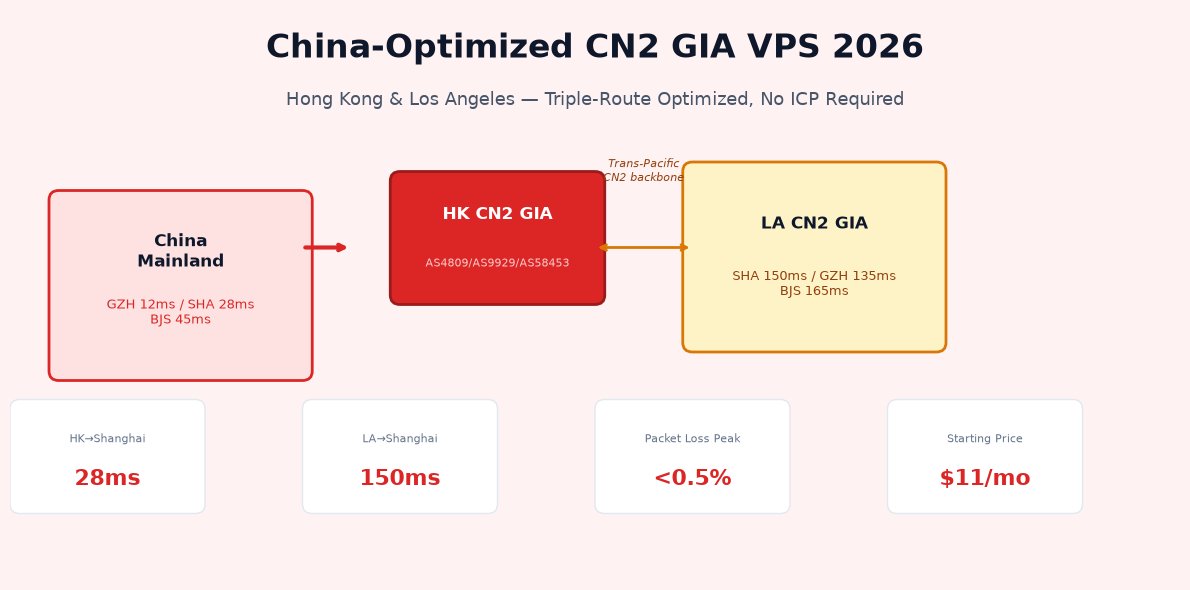
Test from the ISPs and cities your users actually use. Record timestamps, source and destination addresses and the full MTR output. Obtain a separate return-path test when it matters; seeing a CN2 hop does not establish the quality of the entire route. Repeat during relevant peak periods.
Compare total operating costs
Compare the selected configuration, renewal price, transfer allowance, overage policy, IPv4 charges and software licences. Include backup storage, monitoring and staff time. Check the current product and order pages instead of relying on prices quoted in an older tutorial.
Plan a hybrid deployment only when it solves a measured problem
Splitting regions adds database replication, cache invalidation, failover and data-governance work. Define which system owns writes, how users are routed and how recovery works. Regional separation alone is not proof of regulatory compliance.
Validate before switching production traffic
Deploy a representative application, verify DNS and TLS, test login and payment callbacks, and restore a backup in an isolated environment. Confirm provisioning and migration scope with support, then schedule cutover with a rollback plan.