Deployment goal
Compare GPU allocation, memory, isolation and administration requirements. Check the actual hardware and billing terms rather than relying on the product label.
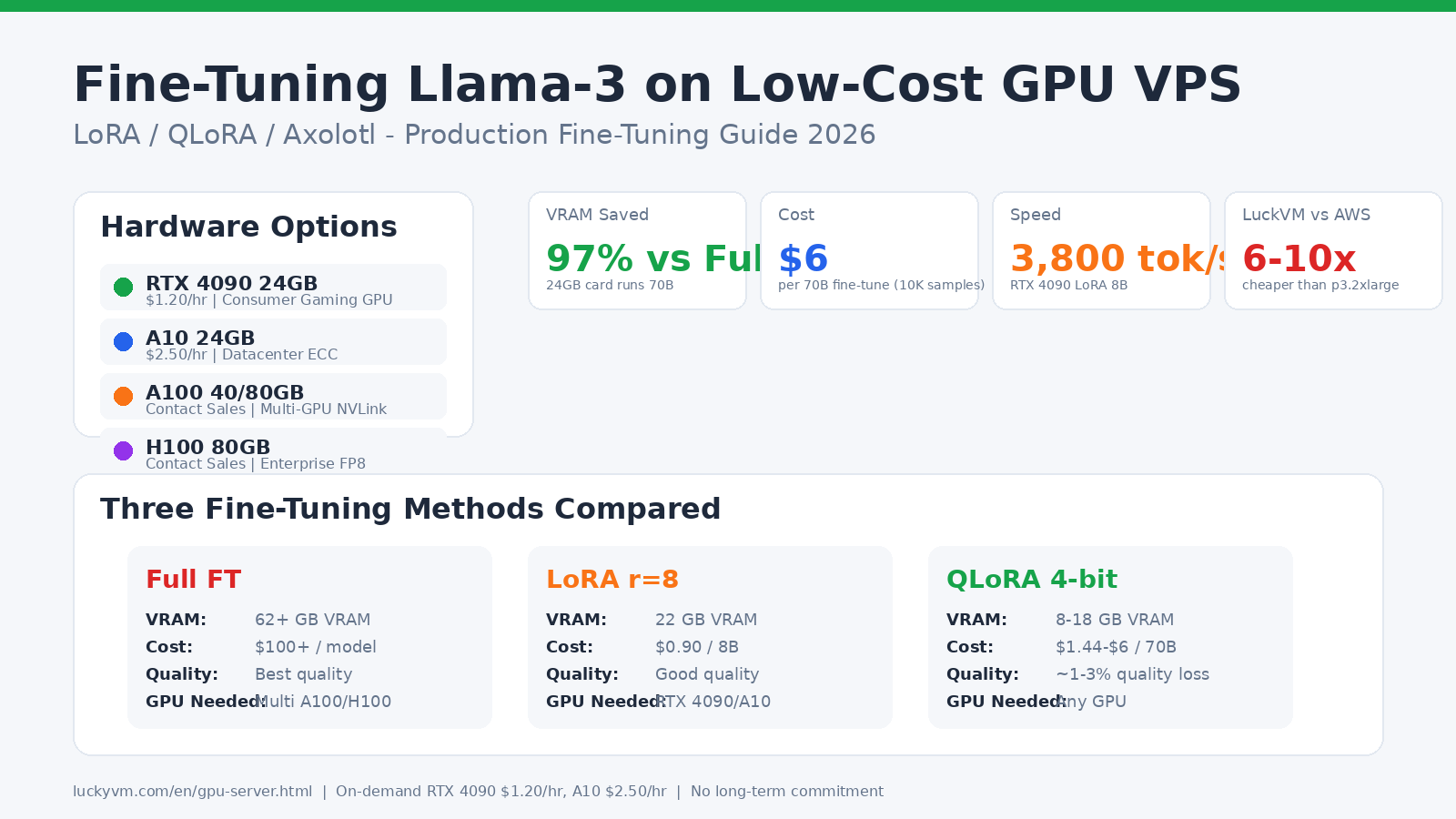
Ask how the accelerator is allocated
Determine whether the workload receives an entire GPU, a partition or another shared arrangement. Verify the usable VRAM and access restrictions instead of inferring them from the phrase GPU VPS.
Compare administration access, driver compatibility and persistence of datasets. The right service is the one that can run and recover your job under its actual resource policy.
Verify the software stack
Record the framework, CUDA and driver compatibility required by the project. Check the available image and administration scope rather than assuming a preinstalled environment includes your exact versions.
Review commercial software licensing separately. Plan persistence for datasets, checkpoints and outputs before launching a long task.
Benchmark your own job
Use a fixed model or scene, input size, precision and concurrency. Measure both throughput and latency for inference; report wall-clock time and resource use for batch jobs.
Token rates and image-generation times are meaningful only with the model, settings and test environment. A result from another model is not a commitment for your workload.
Control the job lifecycle
Save checkpoints outside the active process and test that a stopped job can resume. Include dataset transfer, idle capacity and storage in the cost calculation.
Billing terms come from the selected configuration. Confirm what remains chargeable after a task ends and how cancellation or resource release works.